In Fiji:

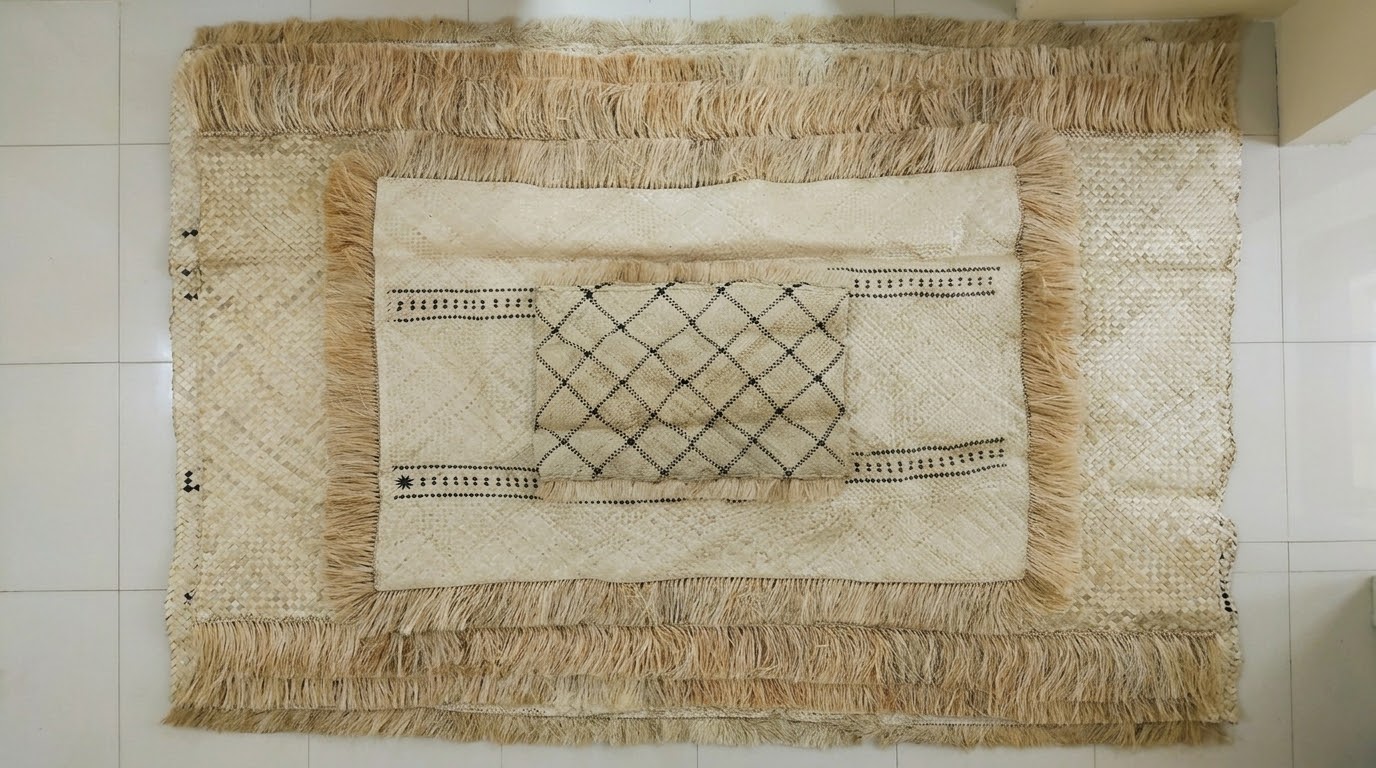
The Suva Multicultural Center is spearheading an initiative to document, revive, and promote the distinct mat-weaving and masi-making traditions across Fiji’s provinces.
Historically, woven mats ‘ibe’ and barkcloth ‘masi or tapa’ served as a visual signature of where a Fijian woman is originally from.
Every province maintained its own signature weaving patterns, materials, and prints, allowing individuals at major gatherings to immediately identify a woman’s region of origin simply by the mat she carried.
However, cultural practitioners warn that this distinct heritage faces dilution as modern practices shift toward standardized styles or borrowing mats from neighboring islands.
Esther Whippy of the Suva Multicultural Center highlighted the importance of reclaiming these lost markers of identity, noting that the society aims to serve as an educational hub for both locals and visitors.
“In the olden days, each woman carried their own mat,” Whippy explained. “In a function, you could easily identify them just by the mat. Likewise with the masi, they have their own print. It’s something that we want to preserve so that whoever comes into the Suva Multicultural Center, we have something to talk about that they can take back with them.”
The effort involves direct collaboration with local artisans and the Ministry of iTaukei Affairs to research, identify, and recreate province-specific styles.
Sereana Duvaga, a 60-year-old artisan from Dakuinuku village in Sawakasa, Tailevu, described the specific features of her district’s traditional weaving styles, such as the Vakavutuvutu mat, a style crafted purely from voivoi (pandanus leaves) without the decorative fringing known as kula.
Duvaga emphasized that returning to authentic regional roots requires shifting away from convenience and restoring correct cultural protocol.
“What we’re trying to revive now is for women to bring their own traditional mats,” Duvaga said. “Now, people bring mats from Nairai or other places to events, which is not right for our specific traditions. We have to bring our own mat from our own province.”
As part of this push for authenticity, the Center is encouraging traditional material substitutions over synthetic alternatives. Weavers are returning to ‘vau’, a traditional fringing material sourced from hibiscus bark as an alternative to modern decorative trims, matching historic practices alongside broader research into traditional garments like the ‘sulu and jaba’.
Through ongoing research and hands-on preservation at the Suva Multicultural Center, organizers hope to ensure that Fiji’s diverse weaving arts remain an active, living representation of regional pride for generations to come.

Rewa eye 10th BOG title as Nasinu stand in the...
Sep 09, 2026, 10:51 AM
Warning over criminal money funding political parties
Sep 09, 2026, 10:36 AM

Cornish joins Drua Junior Development Programme
Sep 09, 2026, 10:08 AM
Seaweed Farms Get Infrastructure Boost
Sep 09, 2026, 10:00 AM
Women urged to break barriers and take their place in...
Sep 08, 2026, 06:48 PM
Rewa eye 10th BOG title as Nasinu stand in the...
Sep 09, 2026, 10:51 AM
Warning over criminal money funding political parties
Sep 09, 2026, 10:36 AM
Cornish joins Drua Junior Development Programme
Sep 09, 2026, 10:08 AM
Seaweed Farms Get Infrastructure Boost
Sep 09, 2026, 10:00 AM
Women urged to break barriers and take their place in...
Sep 08, 2026, 06:48 PM
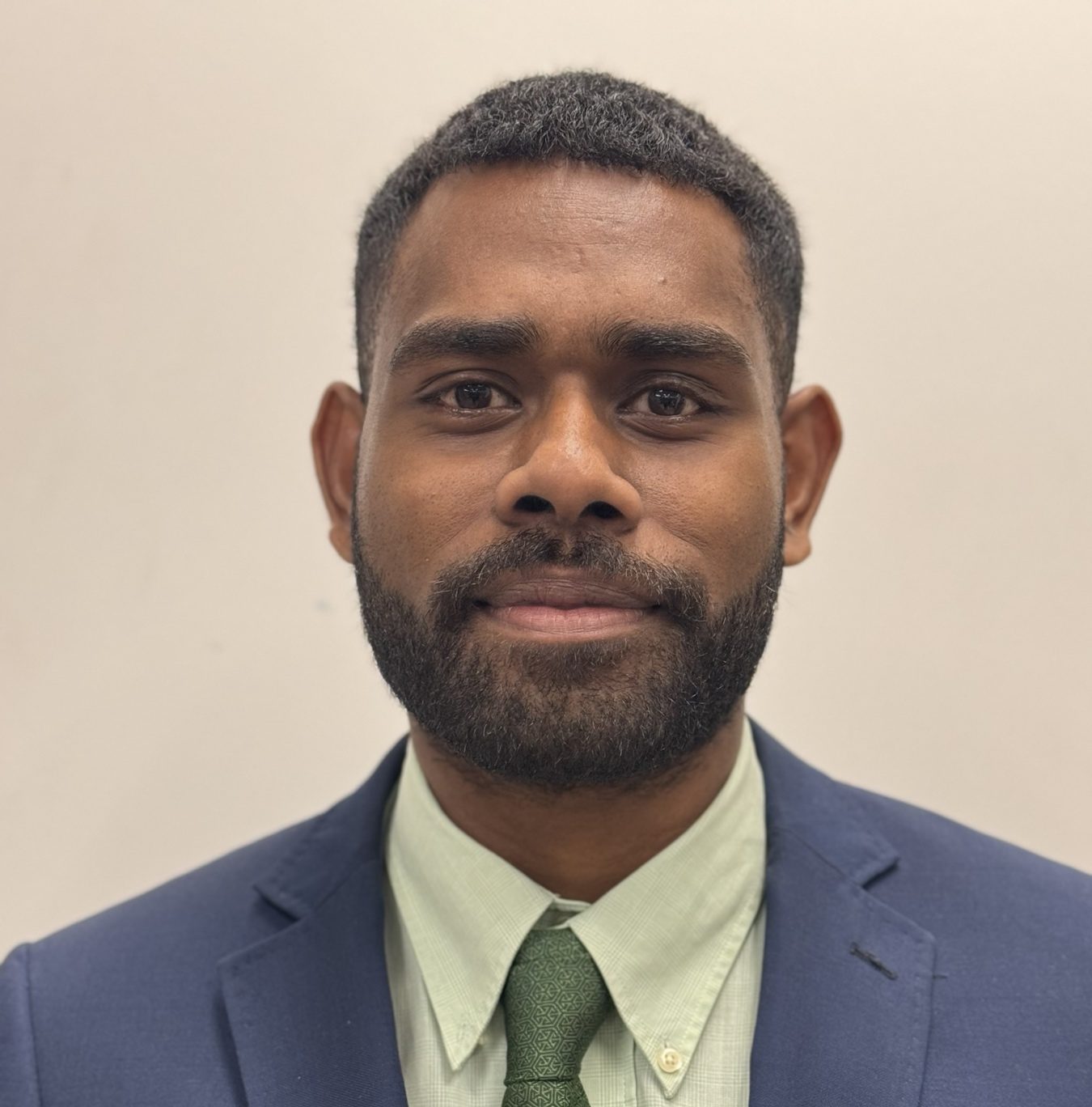 Eparama Warua