In Fiji:

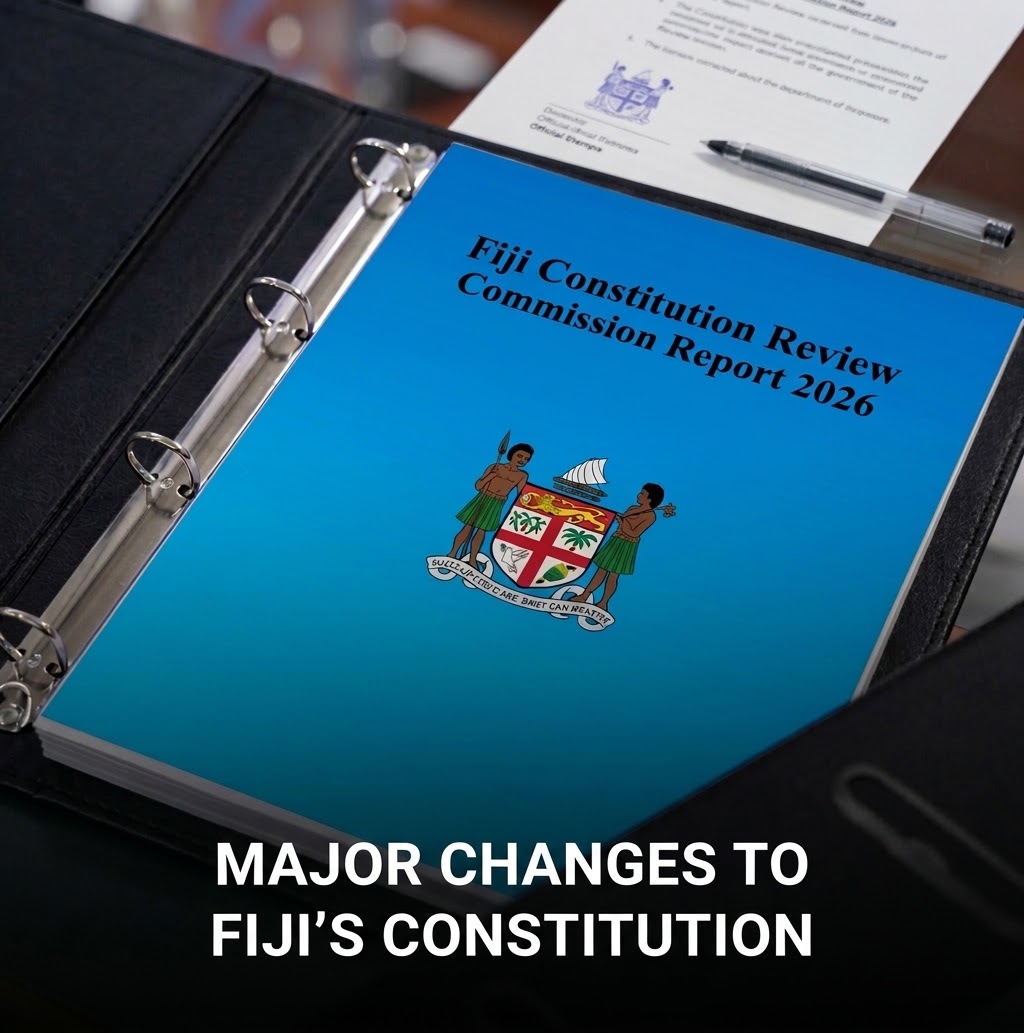
The Constitution Review Commission is proposing major changes to the way the country is governed, including changes to Parliament, the powers of the Prime Minister, the military and constitutional immunity.
The recommendations are contained in the Commission’s report, tabled in Parliament today.
Among the major proposals is a new 60-member Parliament, along with a two-term limit for the Prime Minister and a Cabinet of up to 15 members.
The Commission is also recommending the removal of the constitutional immunity provided to certain people for past actions connected to previous political upheavals.
It proposes repealing Chapter 10 of the 2013 Constitution, which provides immunity from criminal, civil and professional liability for certain past actions.
The Commission also recommends that no future attempt to establish a government outside the Constitution should be protected by immunity.
It proposes repealing Chapter 10 of the 2013 Constitution, which provides immunity from criminal, civil and professional liability for certain past actions.
The Commission also recommends that no future attempt to establish a government outside the Constitution should be protected by immunity.
The role of the military is another major area of proposed change.
The Commission wants the Constitution to affirm the primacy of democratic civilian authority and clarify that the role of the Republic of Fiji Military Forces should focus on external defence.
Any military assistance to civil authorities, including during emergencies or natural disasters, would be subject to written law and confirmation by Parliament.
The proposed changes also include restructuring the country’s anti-corruption system.
FICAC would focus on investigations, while prosecution would rest with the Director of Public Prosecutions.
The Commission also proposes changes to the parliamentary system, including the return of a Senate and the Bose Levu Vakaturaga, or Great Council of Chiefs.
It is also proposing changes to the way the President is selected, with a six-member Presidential Appointment Committee involving nominations from several institutions.
Religious freedom would remain protected, while the Commission has proposed removing the explicit constitutional declaration that Fiji is a secular state.
The Commission also recommends retaining “Fijian” as the national identity for now, while allowing for a future consultative process on Fiji’s common or national identity.
But these recommendations are not yet constitutional law.
Cabinet says the tabling of the report does not mean Government has accepted all of the Commission’s recommendations. The Cabinet Subcommittee on the Review of the Constitution will consider the proposals before Government decides what changes it wants to take forward.
The next major step is Parliament’s consideration of the Constitution Amendment Bill.
If constitutional amendments are passed by the required parliamentary majority, they would then go to a referendum, where registered voters would decide whether to approve the changes. Fiji has never held a constitutional referendum.

IHG joins Rugby World Cup 2027
Sep 22, 2026, 05:41 PM

IHG joins Rugby World Cup 2027
Sep 22, 2026, 05:30 PM
Constituion review report now in Parliament, available to the public
Sep 22, 2026, 01:31 PM

Junior Officers urged to strengthen staff skills
Sep 22, 2026, 01:01 PM

PSH Hospitals Launches Heart Awareness Campaign
Sep 22, 2026, 12:18 PM
IHG joins Rugby World Cup 2027
Sep 22, 2026, 05:41 PM
IHG joins Rugby World Cup 2027
Sep 22, 2026, 05:30 PM
Constituion review report now in Parliament, available to the public
Sep 22, 2026, 01:31 PM
Junior Officers urged to strengthen staff skills
Sep 22, 2026, 01:01 PM
PSH Hospitals Launches Heart Awareness Campaign
Sep 22, 2026, 12:18 PM
 Eparama Warua