In Fiji:

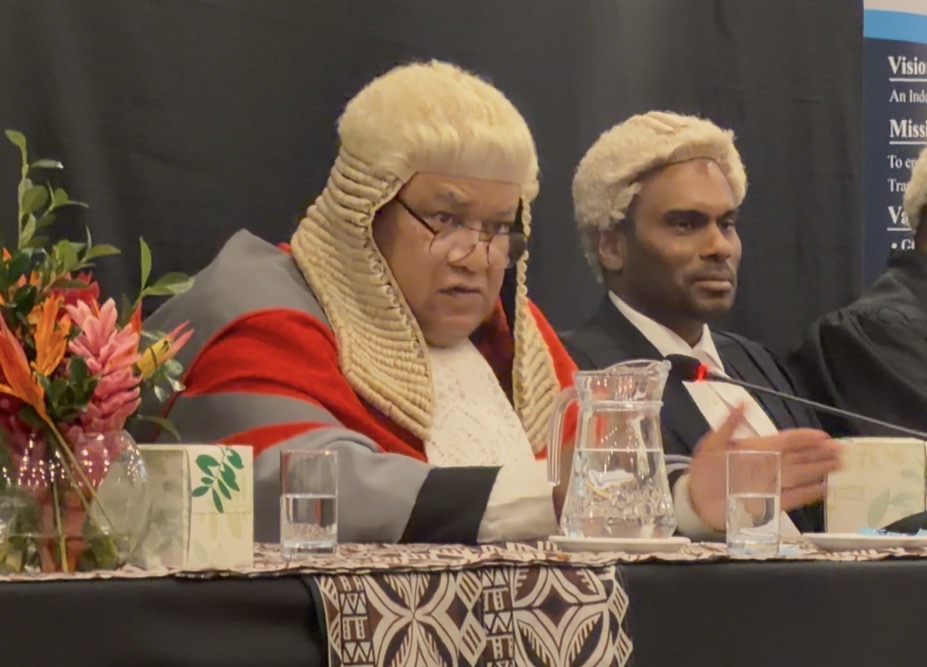
Chief Justice Justice Salesi Temo has urged newly admitted lawyers to thoroughly understand Fiji’s laws, using the recent Commission of Inquiry case as an example of the consequences of failing to properly examine legislation.
Justice Temo made the remarks this morning at the Grand Pacific Hotel in Suva, where 30 University of the South Pacific law graduates were admitted to the Bar after completing their Professional Diploma in Legal Practice.
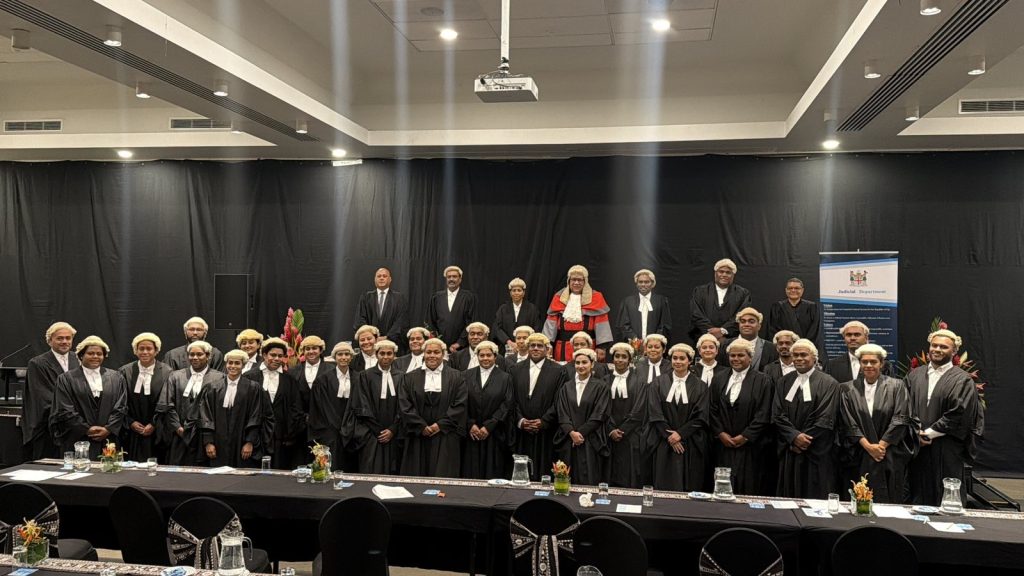
Speaking to the new lawyers, Justice Temo said lawyers are instruments of justice and have a responsibility to ensure the law is properly understood and applied.
He said the Commission of Inquiry case demonstrated why lawyers must carefully read the legislation governing their work.
Justice Temo said lawyers engaged from overseas in the case had failed to properly examine the Commission of Inquiry Act, particularly in relation to whether the President had the power to extend the Commission’s mandate.
He said the issue was not identified by the lawyers at the time, allowing the Commission to continue conducting hearings without valid legal authority to extend its work.
The subsequent work of the Commission was later declared null and void.
“That is your work as lawyers, to see what the legislation says, what the law says. Dig, dig deep, and get advice on the correct way to achieve it,” Justice Temo said.
He stressed that lawyers have a professional responsibility to determine the legal limits of the authority they are advising, rather than simply relying on what a client wants.
“It’s not the ones who hire them, it is the lawyers,” he said.
“We have a work to find out what are the parameters of your power to continue with that legal work. Not the client’s fault, it is the lawyers.”
Justice Temo also questioned what he described as a perception in Fiji that local lawyers are not capable of handling complex legal matters.
He said this has contributed to the practice of bringing in overseas lawyers, some of whom may not have sufficient knowledge of Fiji’s laws.
“There seem to be perception that local lawyers are not capable of settling our legal problems, so we go overseas, and we get overseas lawyers, and most of them have no knowledge of the laws in Fiji,” he said.
“And we hire them at our own peril.”
Justice Temo encouraged people to have greater confidence in Fiji’s legal profession, saying local lawyers have a deeper understanding of the country’s laws and legal environment.
“I often say go to the local lawyers, they live, breathe Fiji law. They know more about Fiji law than those who are hired from overseas,” he said.
Reflecting on his more than three decades on the Bench, Justice Temo said he had witnessed the growth of Fiji’s legal profession and the emergence of highly capable lawyers from USP and other universities.
He said the newly admitted lawyers now have a responsibility to uphold the profession and ensure that justice remains at the centre of their work.
He also reminded those who intend to practise in court that discipline and preparation are essential, particularly the need to thoroughly read and understand their cases.

Fijian Drua confirm eight home venues for 2027
Oct 21, 2026, 10:07 AM
Armed Native Constabulary expands with netball
Oct 21, 2026, 09:31 AM
Gokals Launches Fujitsu Air Conditioning, Focusing on Customer Needs and...
Oct 20, 2026, 04:50 PM

SPX Opens Entries for 2026 Corporate Excellence Awards
Oct 20, 2026, 03:08 PM

Woolworths partners Rugby World Cups in Australia
Oct 20, 2026, 02:47 PM
Fijian Drua confirm eight home venues for 2027
Oct 21, 2026, 10:07 AM
Armed Native Constabulary expands with netball
Oct 21, 2026, 09:31 AM
Gokals Launches Fujitsu Air Conditioning, Focusing on Customer Needs and...
Oct 20, 2026, 04:50 PM
SPX Opens Entries for 2026 Corporate Excellence Awards
Oct 20, 2026, 03:08 PM
Woolworths partners Rugby World Cups in Australia
Oct 20, 2026, 02:47 PM
 Eparama Warua