In Fiji:

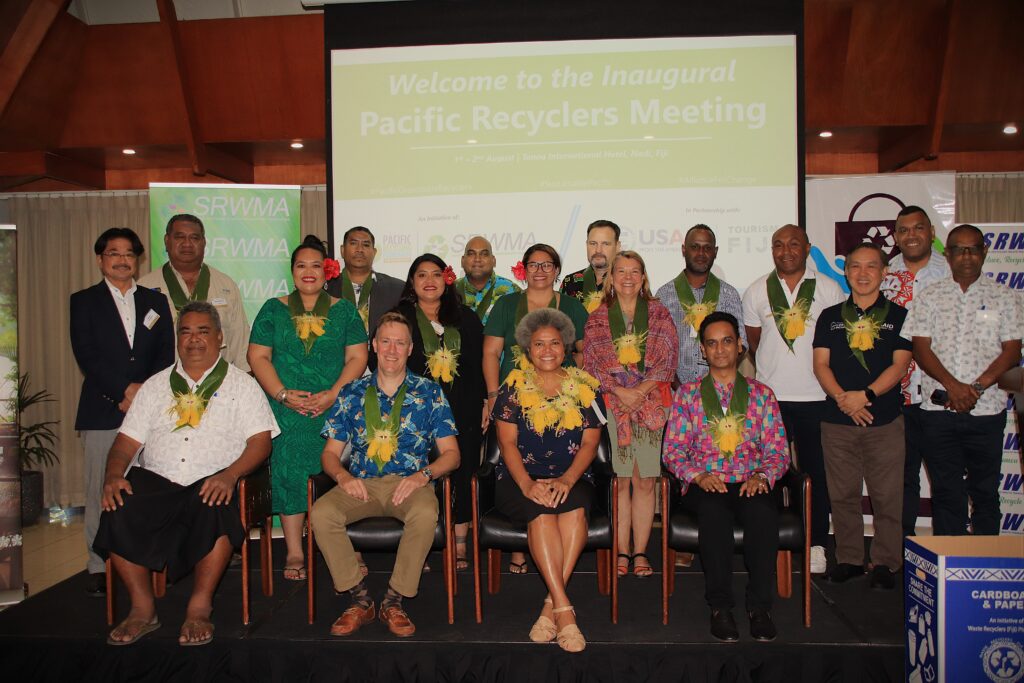
Grassroots recycling organisations across the Pacific are calling for a stronger voice in decisions shaping the region’s recycling and circular economy sectors.
The Pacific Recyclers Alliance (PRA), which represents recycling organisations from Fiji, Samoa, Tonga, Solomon Islands, Papua New Guinea, Vanuatu and Nauru, says its members are concerned about being treated mainly as stakeholders despite policies, investments and economic decisions directly affecting their work and livelihoods.
The Alliance says many of its members have been operating for decades, in some cases for more than 30 years, with little or no formal support.
Their work has included collecting, sorting, processing and transporting recyclable materials while developing systems suited to the realities of Pacific communities.
According to PRA, these organisations have built community and business networks, created employment opportunities and recovered materials that could otherwise end up in drains, landfills and the wider environment.
PRA President Amitesh Deo says the region’s approach to recycling should be shaped by people who have practical experience in the sector.
“Recycling did not begin when it became part of policy or investment conversations,” Deo said, stressing that the knowledge of organisations that have worked in the sector for years should be part of future planning.
The Alliance is also advocating for a broader approach to recycling that goes beyond materials that are commercially valuable or attract financial incentives.
Grassroots recyclers often handle low-value and difficult-to-recover materials, including plastics, plastic containers, cardboard, tin cans and paper, as well as other materials requiring responsible processing.
Figures from the Pacific Recycling Foundation show the scale of this work. Through its entrepreneurial arm, Waste Recyclers Fiji Limited, 31,874 tonnes of recyclable materials were recovered between 2017 and 2026 across multiple material streams.
The recovery included the equivalent of more than 185.7 million individual plastic items and 1.05 million large cartons, along with substantial quantities of scrap metal, glass and preforms.
PRA warns that a recycling system focused only on commercially attractive materials could leave behind some of the region’s most difficult waste streams.
The Alliance says the way forward is straightforward: recycling policies and systems should be developed with recyclers at the table, ensuring that the experience of those working on the ground is reflected in decisions affecting the sector.
Armed Native Constabulary expands with netball
Oct 21, 2026, 09:31 AM
Gokals Launches Fujitsu Air Conditioning, Focusing on Customer Needs and...
Oct 20, 2026, 04:50 PM
SPX Opens Entries for 2026 Corporate Excellence Awards
Oct 20, 2026, 03:08 PM

Woolworths partners Rugby World Cups in Australia
Oct 20, 2026, 02:47 PM
At 71 Karl Smith Continues to Thrive in Farming
Oct 20, 2026, 02:44 PM
Armed Native Constabulary expands with netball
Oct 21, 2026, 09:31 AM
Gokals Launches Fujitsu Air Conditioning, Focusing on Customer Needs and...
Oct 20, 2026, 04:50 PM
SPX Opens Entries for 2026 Corporate Excellence Awards
Oct 20, 2026, 03:08 PM
Woolworths partners Rugby World Cups in Australia
Oct 20, 2026, 02:47 PM
At 71 Karl Smith Continues to Thrive in Farming
Oct 20, 2026, 02:44 PM
 Fiji One News Team