In Fiji:

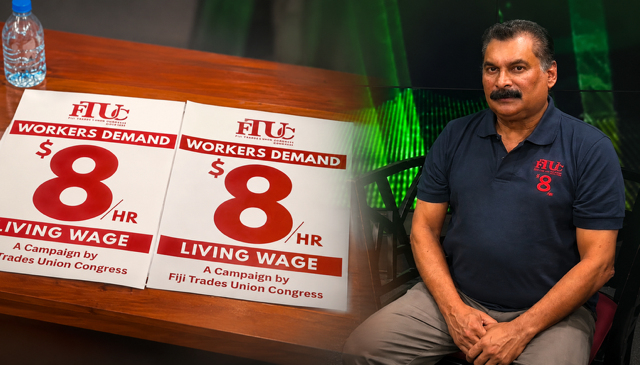
The proposed $8 living wage is gaining support from members of the public who say hardworking Fijian families are struggling to keep up with the rising cost of living.
For workers earning low wages, the proposed increase is being viewed not simply as a pay rise, but as a way to better meet everyday household expenses.
Twenty-eight-year-old Security Officer, Josevata Waqa of Bilo Settlement in Veisari, Lami, supports the proposal, saying he believes it is about time workers receive better wages.
Shynal Dhrishika of Tamavua-Sakoca also supports the proposed living wage, saying the cost of living has become too high for hardworking families earning below the poverty line.
Their views reflect a wider concern among workers and families that current wages are not keeping pace with the cost of food, transport, housing and other basic necessities.
The Fiji Trades Union Congress is pushing for the $8 living wage, with National Secretary Felix Anthony saying workers should ultimately receive a wage that allows them to live with greater financial security.
Anthony says the proposal can be introduced progressively, with larger employers expected to move first while smaller businesses are given time to transition.
He says the FTUC has also proposed an independent committee to assess businesses and determine their capacity to pay.
But some MSME owners are warning that the impact on businesses must also be considered because job losses could ultimately hurt the very workers the proposal is intended to help.
MSME owner Neelam Maharaj says she supports better wages for workers but is concerned that a sudden increase could force some small businesses to downsize or close.
Maharaj employs between 15 and 20 people and says higher wages would also increase other employment-related costs.
She says businesses are already facing increased freight, material and storage costs, making it difficult to absorb a significant wage increase.
However, for workers and their families, the central question remains whether current wages are enough to live on.
The debate over the $8 living wage is therefore not only about what employers can afford to pay, it is also about what workers can afford not to earn.
For families already struggling to meet basic expenses, supporters say higher wages could provide much-needed breathing room and improve their quality of life.

Gokals Launches Fujitsu Air Conditioning, Focusing on Customer Needs and...
Oct 20, 2026, 04:50 PM

SPX Opens Entries for 2026 Corporate Excellence Awards
Oct 20, 2026, 03:08 PM

Woolworths partners Rugby World Cups in Australia
Oct 20, 2026, 02:47 PM

At 71 Karl Smith Continues to Thrive in Farming
Oct 20, 2026, 02:44 PM

RFMF Women Secure Defence Pacific Cup Series
Oct 20, 2026, 02:31 PM
Gokals Launches Fujitsu Air Conditioning, Focusing on Customer Needs and...
Oct 20, 2026, 04:50 PM
SPX Opens Entries for 2026 Corporate Excellence Awards
Oct 20, 2026, 03:08 PM
Woolworths partners Rugby World Cups in Australia
Oct 20, 2026, 02:47 PM
At 71 Karl Smith Continues to Thrive in Farming
Oct 20, 2026, 02:44 PM
RFMF Women Secure Defence Pacific Cup Series
Oct 20, 2026, 02:31 PM
 Eparama Warua