In Fiji:

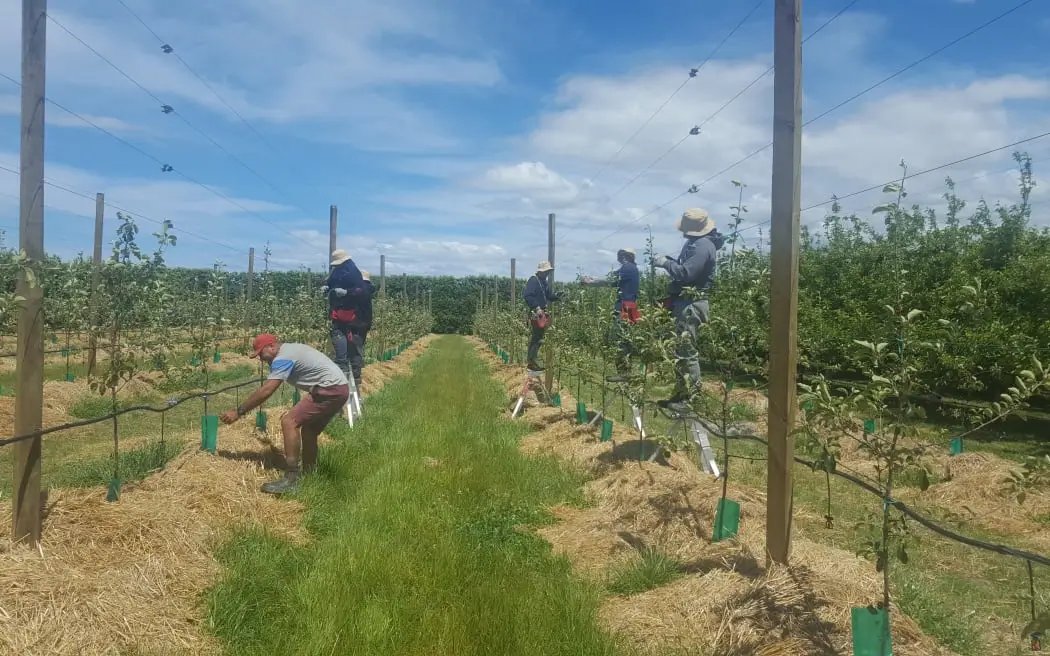
RSE workers from Samoa working in Bostock orchard, Hastings.
The New Zealand Council of Trade Unions (NZCTU) has sounded the alarm over the treatment of Recognised Seasonal Employment (RSE) workers, citing “flagrant breaches” of their minimum entitlements.
In a recent case before the Employment Court, a group of seasonal workers from the Solomon Islands alleged that their former employer had made significant wage deductions, at times reducing their pay to zero.
According to court documents reported by the New Zealand Herald, deductions were made for insurance, wet weather gear, storage, and even missing kitchen equipment from their hostel.
Rachel Mackintosh, acting president of the NZCTU, expressed concern over the vulnerability of RSE workers to exploitation.
She highlighted challenges such as limited resources to pursue legal action, visa constraints tying them to employment, language barriers, and absence of union representation, leaving workers susceptible to having their rights ignored by employers.
The ongoing case, originating in 2020, involves three Solomon Islanders who worked for Pick Hawke’s Bay during the 2018-2019 season.
Horticulture New Zealand has been granted intervener status in the Employment Court proceedings, representing 150 of its members participating in the RSE scheme who could be affected by the case’s outcome.
Mackintosh emphasized the seriousness of the situation, particularly noting instances where workers had their entire pay withheld.
She criticized the practice of deducting expenses like wet weather gear, which contravenes both RSE agreements and New Zealand’s health and safety regulations mandating employers to provide such equipment.
Highlighting the need for transparency, Mackintosh stressed that any proposed deductions must be vetted by Immigration New Zealand before implementation. She underscored the imperative to address exploitative practices inherent in schemes where workers can labor without receiving rightful compensation.
The case underscores broader concerns about the treatment of RSE workers in New Zealand and calls for robust measures to safeguard their rights and well-being.

Japan Clinch 2026 Pacific Nations Cup Title After Thrilling Final...
Sep 20, 2026, 12:01 AM

Canada hold off USA to secure a third-place finish
Sep 19, 2026, 08:49 PM

Fijiana stun Spain with Historic Comeback Victory in Hong Kong
Sep 13, 2026, 09:41 PM

Kikau wins NRL Community Award for Inspiring Impact in Fiji...
Sep 13, 2026, 11:41 AM
Indonesia Volcano Eruption Disrupts Hundreds Of Flights
Sep 07, 2026, 10:56 AM
Japan Clinch 2026 Pacific Nations Cup Title After Thrilling Final...
Sep 20, 2026, 12:01 AM
Canada hold off USA to secure a third-place finish
Sep 19, 2026, 08:49 PM
Fijiana stun Spain with Historic Comeback Victory in Hong Kong
Sep 13, 2026, 09:41 PM
Kikau wins NRL Community Award for Inspiring Impact in Fiji...
Sep 13, 2026, 11:41 AM
Indonesia Volcano Eruption Disrupts Hundreds Of Flights
Sep 07, 2026, 10:56 AM
 Georgina Ledua