In Fiji:

Despite the rapid growth of Fiji’s digital economy, women remain underrepresented in technology-related careers, a gap industry leaders say can only be closed by creating more opportunities, building confidence and exposing young women to the sector early.
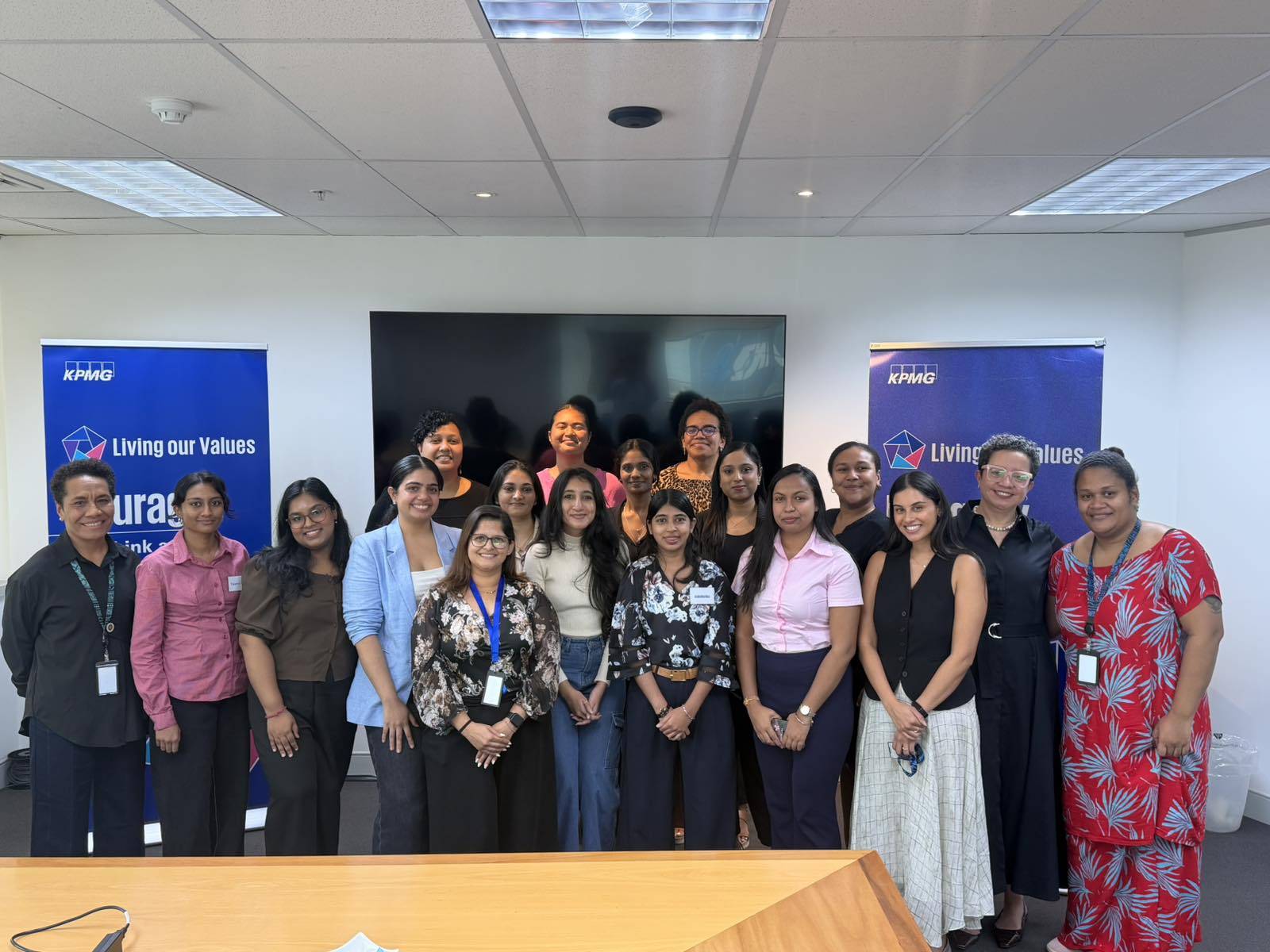
That message was reinforced during KPMG Fiji’s third annual Women in Technology (WIT) Insights Program, where more than 30 women from diverse academic and professional backgrounds took part in a two-day initiative aimed at encouraging careers in technology.
The program, which expanded to both Suva and Nadi for the first time this year, provides participants with practical exposure to careers in technology, mentorship from industry professionals and the opportunity to develop skills in emerging areas such as artificial intelligence and digital innovation.
One participant, 22-year-old Faranisese Nawame, said the program had challenged her perception that technology careers were only suited to those with an information technology background.
A graduate of the University of the South Pacific with a Bachelor of Commerce majoring in accounting and economics, Nawame said technology has become an essential part of every profession.
“I’ve always had a passion for technology, even though I studied accounting and economics. Technology is everywhere in our daily work, and I wanted to understand how organisations like KPMG are using it.”
She said one of the biggest lessons she learnt was that technology careers are open to people from different educational backgrounds.
“I realised KPMG is much more than an auditing firm. It welcomes women from different degrees and experiences to innovate and contribute through technology.”
Nawame also highlighted the importance of ethical artificial intelligence, saying AI should be used responsibly to improve productivity rather than replace critical thinking.
She believes one of the biggest challenges facing women entering the technology industry is the perception that it remains a male-dominated field.
“People often think difficult technical jobs should be done by men. I would encourage women to step up to the challenge because those challenges should motivate us rather than discourage us.”
University of the South Pacific part-time student Anjini Nishika shared similar views, saying the program had shown her that the biggest barrier facing women is often confidence rather than capability.
“There is a gap in the tech industry with women trying to enter technology-related roles, but what we’ve learnt is that the gap is in confidence, not competence.”
She said meeting women already working in the technology sector gave participants confidence that they too could succeed.
“It shows us that there is nothing stopping us except our own mindset.”
Nishika said while artificial intelligence is transforming workplaces and education, users must understand its ethical limits.
“AI has made many tasks easier, but people need to know where AI ends and where their own thinking begins. We also need to be careful about the information we share because cybercrime is becoming more common.”
KPMG Fiji Audit Partner Lisa Apted said the program’s expansion reflected growing interest from young women seeking careers in technology.
She said this year’s program attracted participants across both Suva and Nadi, compared with previous years when it was held only in the capital.
“It has been amazing to see the enthusiasm of these young women. Technology is the future, and giving them the opportunity to hear directly from women already working in the industry helps them see what is possible.”
Addressing concerns that artificial intelligence could replace jobs, Apted said technology would continue to require human judgement.
“AI is built by people and influenced by people. It can support our work, but you still need a human lens to interpret the results and ensure they are accurate and relevant.”
She said the program is already producing tangible employment outcomes, with three of the nine participants from last year’s Suva intake now employed by KPMG.
“The opportunities are real. Challenge yourself, step outside your comfort zone and have a go. We only discover what we are capable of when we try.”
KPMG Fiji Managing Partner Sharvek Naidu said the Women in Technology Insights Program is designed to create a supportive environment where women can build confidence, strengthen their skills and explore career pathways in technology.
He said the expansion to both Suva and Nadi reflects KPMG Fiji’s commitment to giving more women equal access to opportunities in one of the country’s fastest-growing industries.

Fijian Drua confirm eight home venues for 2027
Oct 21, 2026, 10:07 AM

Armed Native Constabulary expands with netball
Oct 21, 2026, 09:31 AM
Gokals Launches Fujitsu Air Conditioning, Focusing on Customer Needs and...
Oct 20, 2026, 04:50 PM

SPX Opens Entries for 2026 Corporate Excellence Awards
Oct 20, 2026, 03:08 PM

Woolworths partners Rugby World Cups in Australia
Oct 20, 2026, 02:47 PM
Fijian Drua confirm eight home venues for 2027
Oct 21, 2026, 10:07 AM
Armed Native Constabulary expands with netball
Oct 21, 2026, 09:31 AM
Gokals Launches Fujitsu Air Conditioning, Focusing on Customer Needs and...
Oct 20, 2026, 04:50 PM
SPX Opens Entries for 2026 Corporate Excellence Awards
Oct 20, 2026, 03:08 PM
Woolworths partners Rugby World Cups in Australia
Oct 20, 2026, 02:47 PM
 Eparama Warua