In Fiji:


As the 2027 Rugby World Cup in Australia moves closer, South Africa’s biggest advantage may be the depth of talent available to head coach Rassie Erasmus.
The Springboks enter the next World Cup cycle as back-to-back champions, but the challenge of defending their title will demand more than relying on the players who delivered success in 2019 and 2023.
Some established internationals have retired, while others have moved overseas.
Yet South Africa continues to introduce players who appear capable of stepping into the international environment.
For supporters looking ahead to 2027, the emergence of 20-year-old Sharks fly-half Vusi Moyo offers a glimpse of that depth.
Moyo was handed his first Test start against Wales in Durban after just 58 minutes of senior rugby.
The decision might seem bold elsewhere, but it reflects South Africa’s willingness to expose young talent to the highest level as the next World Cup approaches.
The question is not simply how South Africa keeps finding talented players.
It is why the country appears capable of producing them in such numbers.
One obvious factor is participation. South Africa has a huge rugby-playing population, and the success of the Springboks has helped attract even more youngsters to the game.
Stormers forwards coach Rito Hlungwani believes the impact of the team’s World Cup victories has encouraged children from across racial backgrounds to pick up a rugby ball.
But the pathway to the Springboks involves more than having a large player base.
Hlungwani argues that the country’s rugby culture creates a particular mindset among young players.
Children grow up watching the national team and aspiring to reproduce the qualities associated with the Springboks, especially their physicality and intensity.
Former Springbok Hanyani Shimange has also identified the standards required at international level: defensive reliability, a high work-rate and the ability to play with power.
Those expectations are becoming part of the development process long before players reach Test rugby.
That could prove crucial for South Africa’s 2027 ambitions.
While other nations may be searching for replacements when experienced players leave the international stage, the Springboks appear to have a system that continually prepares the next generation.
Moyo’s rapid rise is one example.
The wider picture is a country where participation, coaching, competition and a strong rugby identity combine to create a steady stream of contenders for the green and gold.
For the rest of the rugby world, that is what makes South Africa such a formidable prospect heading into 2027.
The Springboks are not simply defending their title with the squad that won the last two tournaments.
They are already developing the players who could help them build the next one.
Te Nana predicts blockbuster Rugby World Cup 2027
Oct 21, 2026, 11:34 AM
Couple Further Remanded Over Alleged Assault of 12-Year-Old Boy
Oct 21, 2026, 11:26 AM
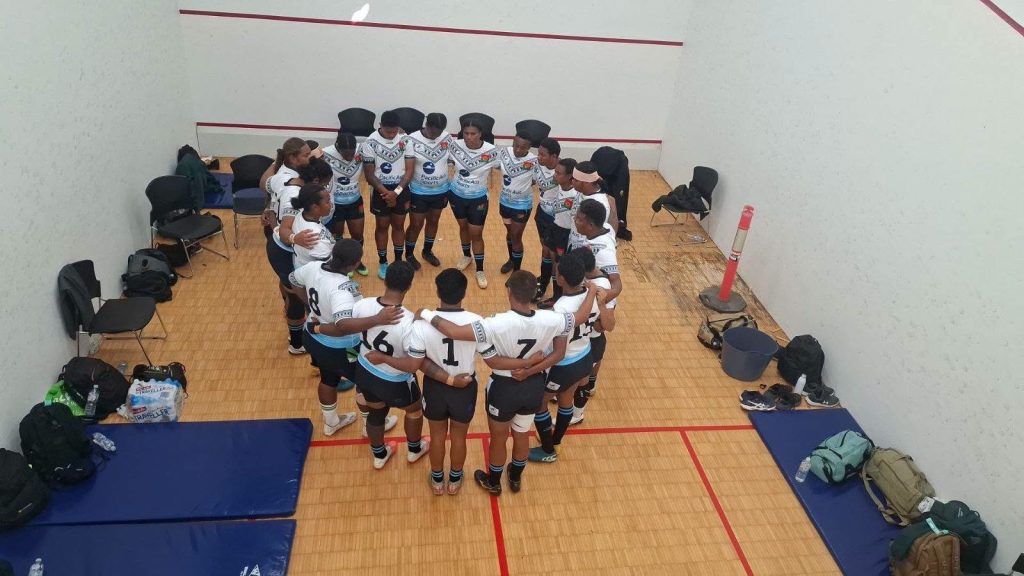
Pacific Summit pushes growth of women’s rugby
Oct 21, 2026, 11:12 AM
Fijian Drua confirm eight home venues for 2027
Oct 21, 2026, 10:07 AM
Armed Native Constabulary expands with netball
Oct 21, 2026, 09:31 AM
Te Nana predicts blockbuster Rugby World Cup 2027
Oct 21, 2026, 11:34 AM
Couple Further Remanded Over Alleged Assault of 12-Year-Old Boy
Oct 21, 2026, 11:26 AM
Pacific Summit pushes growth of women’s rugby
Oct 21, 2026, 11:12 AM
Fijian Drua confirm eight home venues for 2027
Oct 21, 2026, 10:07 AM
Armed Native Constabulary expands with netball
Oct 21, 2026, 09:31 AM
 Fiji One News Team