In Fiji:


The Fiji Competition and Consumer Commission (FCCC) has defended its recent fuel pricing methodology adjustments, following concerns raised by Opposition MP and Standing Committee member Premila Kumar during a parliamentary review of the commission’s 2023–2024 annual report.
Appearing before the Standing Committee on Economic Affairs chaired by Assistant Minister in the Prime Minister’s Office Sakiusa Tubuna, FCCC Chief Executive Officer Senikavika Jiuta said the commission had not changed its fuel pricing methodology, but instead expanded the pricing assessment window in response to global market instability.
Kumar questioned the FCCC’s decision to apply an additional 20-day pricing window in April’s fuel price calculations, arguing that the move lacked transparency and created uncertainty for businesses and consumers.
She said the methodology appeared to have shifted without sufficient public explanation.
“You cannot just nilly-willy change the methodology as and when you like,” Kumar told the committee.
“People who are doing business also need to understand your methodology. That is why I started off with the word transparency.”
Kumar said the FCCC’s initial fuel price announcement stated that the “same process” and “same methodology” had been used, but later clarification revealed that an extra 20 days had been added to the pricing calculations.
She argued that the public should have been clearly informed from the outset.
“If you had increased it by 20 days on day one, when you released the data, and explained it clearly, then this confusion would not have arisen,” she said.
Responding to the concerns, Jiuta maintained that the core fuel pricing methodology, based on the “least cost supplier” model, remained unchanged.
She explained that the commission decided to extend the pricing window after monitoring escalating international tensions between Iran and the United States in late February, which threatened global fuel supply and pricing stability.
“As a regulator, we have to be on par with what’s happening in the international market,” Jiuta said.
“We had to take action to protect consumers because the increase would have had a macroeconomic impact across the country.”
Jiuta told the committee that without intervention, diesel prices could have surged to around $4.60 per litre.
Instead, she said the FCCC’s temporary adjustment limited the April diesel price to approximately $2.93 per litre, while May prices remained below the projected spike.
“As soon as fuel prices go up, the first people on our doorstep are bus operators,” she said.
“Apart from the bus operators, we have the electricity sector, manufacturers, everybody gets impacted. Fuel becomes the trigger point for cost of living increases.”
However, Kumar insisted the issue was not the intervention itself, but the way it was communicated.
“As a regulator, you need to be mindful of that. It cannot be subjective. It has to be objective,” she said.
Jiuta acknowledged that the FCCC could have communicated the changes more clearly.
“We should have set it out much better and much clearer,” she admitted.
“But we had disclosed it from day one.”

SPX Opens Entries for 2026 Corporate Excellence Awards
Oct 20, 2026, 03:08 PM

Woolworths partners Rugby World Cups in Australia
Oct 20, 2026, 02:47 PM

At 71 Karl Smith Continues to Thrive in Farming
Oct 20, 2026, 02:44 PM

RFMF Women Secure Defence Pacific Cup Series
Oct 20, 2026, 02:31 PM
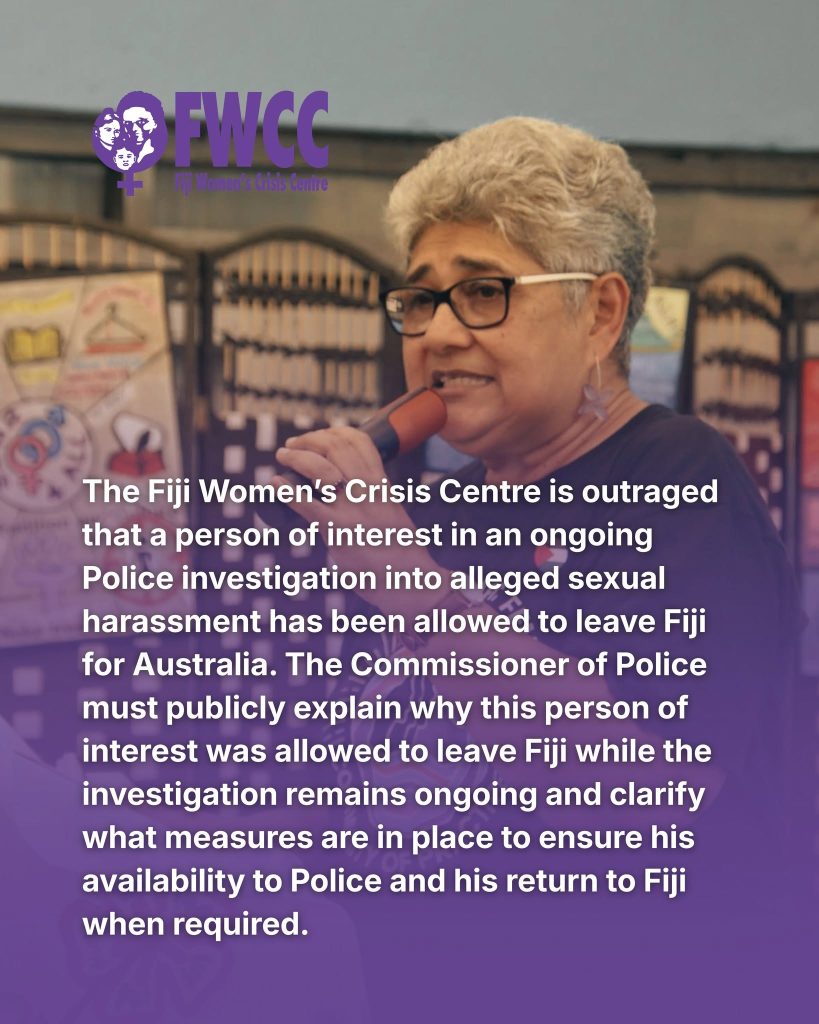
FWCC Seeks Answers Over Person of Interest Leaving Fiji
Oct 20, 2026, 01:26 PM
SPX Opens Entries for 2026 Corporate Excellence Awards
Oct 20, 2026, 03:08 PM
Woolworths partners Rugby World Cups in Australia
Oct 20, 2026, 02:47 PM
At 71 Karl Smith Continues to Thrive in Farming
Oct 20, 2026, 02:44 PM
RFMF Women Secure Defence Pacific Cup Series
Oct 20, 2026, 02:31 PM
FWCC Seeks Answers Over Person of Interest Leaving Fiji
Oct 20, 2026, 01:26 PM
 Eparama Warua