In Fiji:


The Fiji Hotel and Tourism Association (FHTA) says the confusion surrounding the new Tourism Services Tax (TST) could have been prevented if Government had acted on concerns raised by the tourism industry months before the tax was introduced.
The association says it first raised objections when the five percent levy was announced, arguing that there had been no meaningful industry consultation.
It also proposed alternative ways of supporting Fiji Airways that would not place additional pressure on the wider tourism supply chain.
FHTA chief executive officer Fantasha Lockington says the association repeatedly asked Government to exclude holidays that had already been booked and paid for, similar to the treatment under the former Service Turnover Tax.
The association also sought clarification on the tax’s sunset clause, but says neither request was reflected in the final Gazette.
Another concern was the limited time businesses would have to prepare for the new system. FHTA had requested at least four weeks between the release of the Fiji Revenue and Customs Service’s Standard Interpretation Guidelines and the implementation of the tax.
However, the guidelines were only finalized this week, leaving tourism operators about 10 days to adjust before the TST takes effect on September 1.
Lockington says the short timeframe has now placed travel agents, wholesalers and tour operators in Fiji’s major source markets under pressure as they work to change booking systems, invoicing procedures and customer communications.
The issue has already drawn criticism from the Australian travel industry, with the Australian Travel Industry Association describing the retrospective application of the tax to existing bookings as unacceptable.
Travel agents dealing with itineraries covering multiple resorts have reportedly faced uncertainty over how the tax should be collected, with some having to revisit bookings that were paid for months ago.
New Zealand travel agents have also raised concerns during Fiji tourism roadshow events in Christchurch and Auckland this week.
FHTA says the uncertainty risks damaging Fiji’s reputation as a reliable tourism destination, particularly in competitive international markets.
Lockington stressed that the industry is not opposed to Government support for Fiji Airways. However, she said businesses needed adequate consultation, preparation time and clear rules before the new tax was introduced.
The concerns also come as Government continues to support Fiji Airways financially. Parliament approved a further $200 million Government guarantee for the airline’s borrowing on August 17, bringing the total Government-guaranteed exposure to Fiji Airways debt to $1.33 billion, equivalent to 9.5 percent of GDP.
FHTA maintains that the current disruption was avoidable and says Government had opportunities to address the industry’s concerns before the tax became a source of uncertainty for Fiji’s tourism sector.
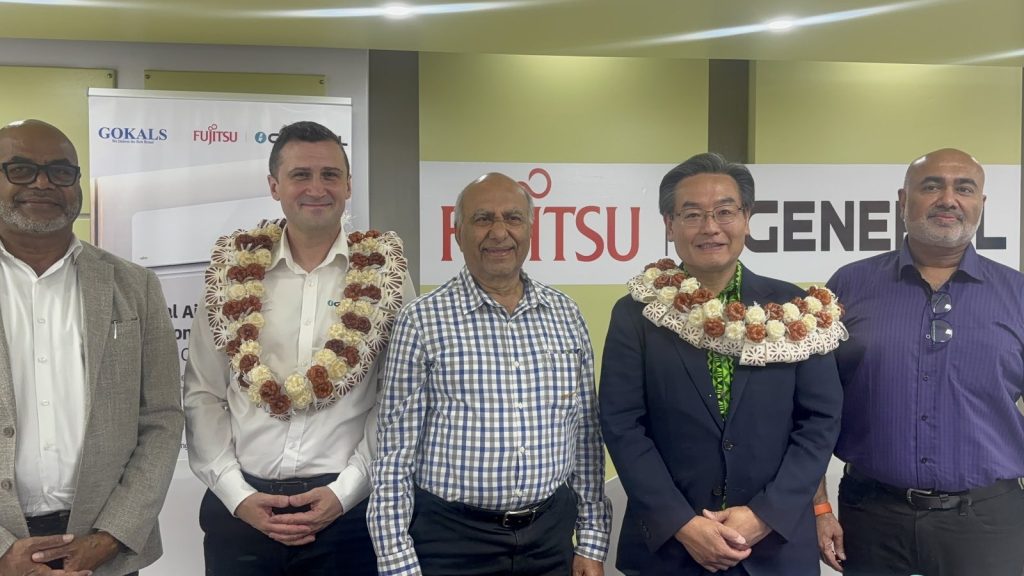
Gokals Launches Fujitsu Air Conditioning, Focusing on Customer Needs and...
Oct 20, 2026, 04:50 PM

SPX Opens Entries for 2026 Corporate Excellence Awards
Oct 20, 2026, 03:08 PM

Woolworths partners Rugby World Cups in Australia
Oct 20, 2026, 02:47 PM

At 71 Karl Smith Continues to Thrive in Farming
Oct 20, 2026, 02:44 PM

RFMF Women Secure Defence Pacific Cup Series
Oct 20, 2026, 02:31 PM
Gokals Launches Fujitsu Air Conditioning, Focusing on Customer Needs and...
Oct 20, 2026, 04:50 PM
SPX Opens Entries for 2026 Corporate Excellence Awards
Oct 20, 2026, 03:08 PM
Woolworths partners Rugby World Cups in Australia
Oct 20, 2026, 02:47 PM
At 71 Karl Smith Continues to Thrive in Farming
Oct 20, 2026, 02:44 PM
RFMF Women Secure Defence Pacific Cup Series
Oct 20, 2026, 02:31 PM
 Fiji One News Team