In Fiji:

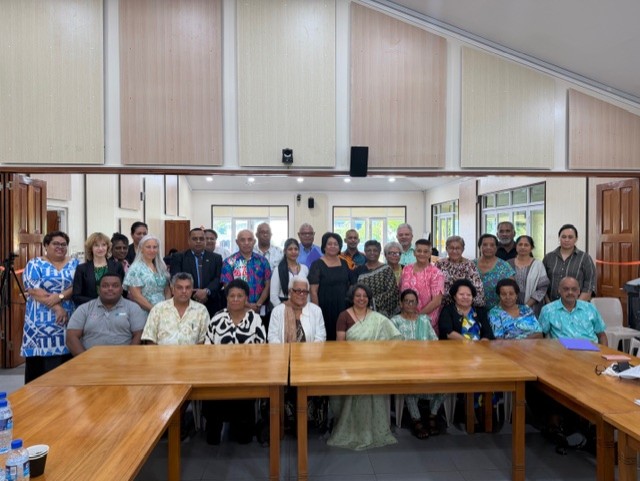
Older Fijians are struggling with financial insecurity, limited access to healthcare services, and growing concerns about neglect and isolation, according to findings presented during the Validation Workshop for Fiji’s National Ageing Policy.
Consultant Pauline Tweedie said extensive consultations with communities across Fiji revealed that many older persons rely heavily on the Government’s social pension scheme due to insufficient retirement savings.
Tweedie said while some older people receive pensions or Fiji National Provident Fund support, many reported that the assistance is no longer enough to cope with the rising cost of living.
She said concerns were raised about increasing costs associated with food, fuel, transport and daily necessities, with many older persons saying their current pensions are not keeping up with inflation.
Access to healthcare was also highlighted as a major challenge, particularly for older persons living in rural and maritime communities.
Tweedie said while Suva residents may have easier access to hospitals and specialist services, many communities outside urban centres face shortages of medicine, medical equipment and trained personnel.
She added that community health workers are trying their best to support older persons but often lack adequate resources and specialised training to meet the growing needs of the ageing population.
Transportation and accessibility issues were also raised during consultations.
According to Tweedie, older persons reported difficulties boarding buses and concerns about unsafe driving practices, while some said designated seating for senior citizens is not always respected or made available.
Another issue identified was neglect and loneliness among older people, particularly as younger family members migrate for employment opportunities or move away from villages.
She said many elderly people are left behind while still carrying responsibilities such as caring for grandchildren.
Tweedie said there were calls from communities to lower the eligibility age for the social pension scheme from 65 to 60 years, to align with Fiji’s retirement age.
However, she acknowledged that Government would need to carefully assess the financial implications of such recommendations.
She also stressed the importance of encouraging more Fijians, especially informal workers, to voluntarily contribute towards retirement savings through the Fiji National Provident Fund.
Minister for Women, Children and Social Protection Sashi Kiran said the policy is now moving through Government consultation processes before being taken to Cabinet for approval.
Kiran clarified that the policy itself does not directly determine allowances or pension payments, but instead provides a national framework to address issues affecting older persons across Government ministries.
She said one of the key outcomes from consultations was the need for stronger legal protections for older persons, with Government now working towards developing legislation on ageing and elder protection.
Kiran added that implementation of the policy would require collaboration across ministries, including transport and health sectors, to ensure older persons can better access essential services nationwide.
Tweedie also acknowledged the strong community and cultural support systems that continue to exist in Fiji, including assistance provided through religious groups, community organisations and local health workers.
She encouraged younger people to spend more time with older family members, learn from their experiences and assist them in adapting to increasing digital and online services.

Gokals Launches Fujitsu Air Conditioning, Focusing on Customer Needs and...
Oct 20, 2026, 04:50 PM

SPX Opens Entries for 2026 Corporate Excellence Awards
Oct 20, 2026, 03:08 PM

Woolworths partners Rugby World Cups in Australia
Oct 20, 2026, 02:47 PM

At 71 Karl Smith Continues to Thrive in Farming
Oct 20, 2026, 02:44 PM

RFMF Women Secure Defence Pacific Cup Series
Oct 20, 2026, 02:31 PM
Gokals Launches Fujitsu Air Conditioning, Focusing on Customer Needs and...
Oct 20, 2026, 04:50 PM
SPX Opens Entries for 2026 Corporate Excellence Awards
Oct 20, 2026, 03:08 PM
Woolworths partners Rugby World Cups in Australia
Oct 20, 2026, 02:47 PM
At 71 Karl Smith Continues to Thrive in Farming
Oct 20, 2026, 02:44 PM
RFMF Women Secure Defence Pacific Cup Series
Oct 20, 2026, 02:31 PM
 Eparama Warua